
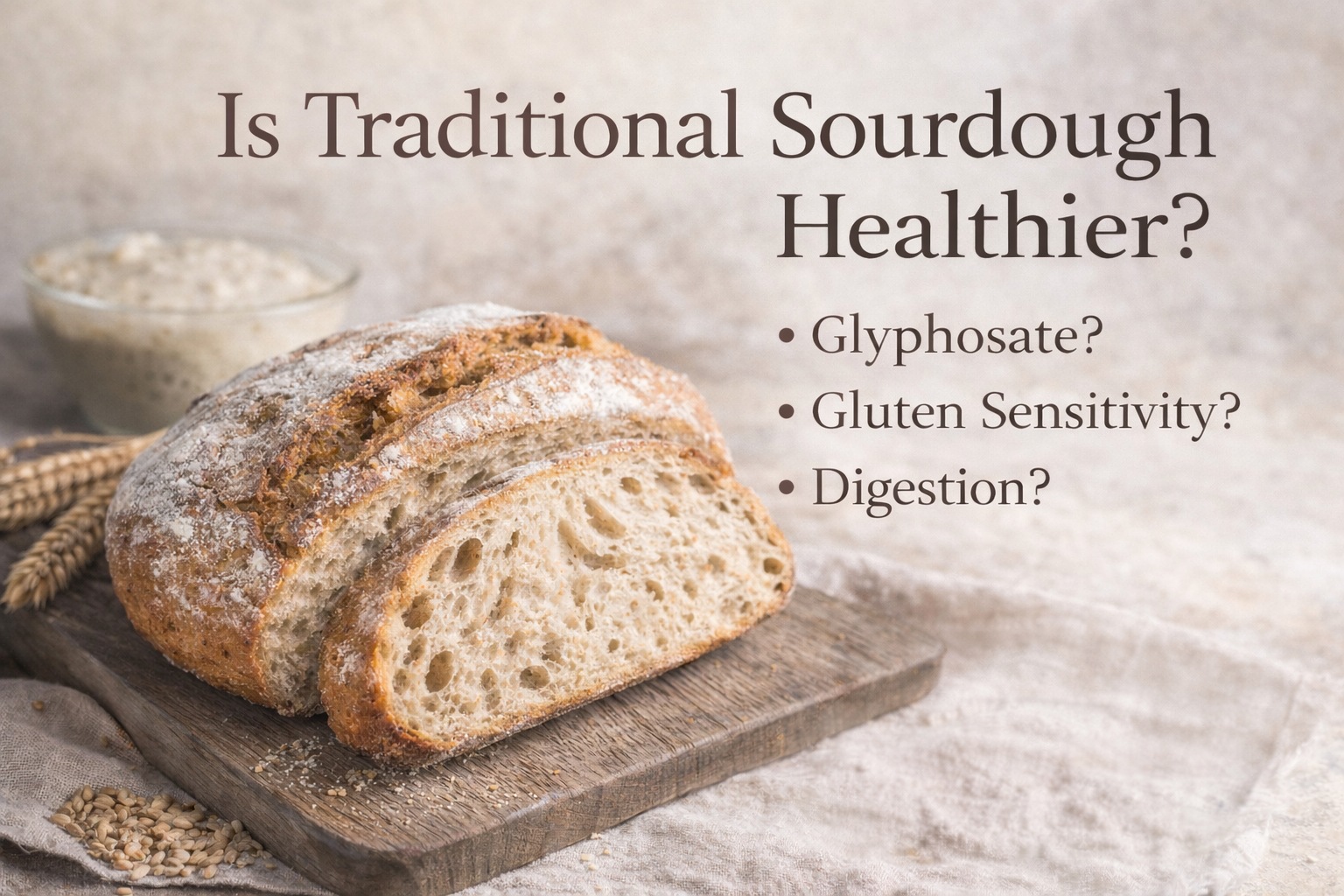
What’s All the Hype About Sourdough Bread?
For many people, the return to sourdough bread isn’t about trends. It’s about returning to the way bread was originally made — slowly, intentionally, and in partnership with natural fermentation.
This shift is especially important for individuals who prioritize clean food sourcing, avoid glyphosate exposure, and choose traditional foods like raw milk, fermented vegetables, and whole, unprocessed ingredients.
Because the real issue with modern bread isn’t just gluten.
It’s how the grain is grown, processed, and prepared.
The hidden difference: modern wheat vs traditionally prepared wheat
Most modern wheat in the United States is exposed to glyphosate — often applied shortly before harvest as a drying agent. This process, known as desiccation, allows for faster and more uniform harvesting.
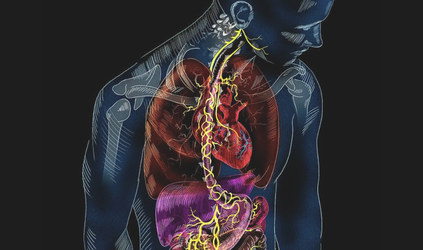
Glyphosate exposure is increasingly studied for its potential effects on the gut microbiome, intestinal lining, and overall metabolic health.
At the same time, most commercial bread is produced using rapid-rise yeast, with fermentation lasting only a few hours.
This combination creates bread that the human digestive system was never designed to handle in this form.
Traditional sourdough changes this completely.
Sourdough uses time to restore what modern processing removed
True sourdough is created using wild yeast and beneficial bacteria. These microorganisms slowly ferment the flour over 24 to 72 hours.
During this time, fermentation helps:
• break down gluten proteins
• reduce compounds that irritate the gut
• lower phytic acid, which can block mineral absorption
• support the growth of beneficial bacteria
• begin the digestive process before the bread is consumed
This is the same principle behind other traditional foods like yogurt, kefir, sauerkraut, and raw milk cheeses.
The food is transformed before it ever reaches the body.
Why people who choose raw milk often choose sourdough
Many individuals who choose raw milk do so because they recognize the difference between living, traditionally prepared foods and industrially processed versions.
Raw milk contains active enzymes, beneficial bacteria, and intact nutritional structures that are often altered or destroyed through modern processing.
Sourdough follows the same principle.
The fermentation process restores the natural relationship between humans and grain by allowing beneficial organisms to prepare the food first.
This is why many people who cannot tolerate conventional bread find they tolerate traditionally fermented sourdough without issue.
The preparation method matters as much as the ingredient itself.
Who may benefit most from traditional sourdough
Sourdough may be especially supportive for individuals who:
• prioritize glyphosate avoidance
• focus on gut health and microbiome balance
• consume traditionally prepared foods like raw milk
• experience discomfort from modern commercial bread
• want more stable energy and fewer blood sugar spikes
• are transitioning away from ultra-processed foods
Many people report less bloating, improved digestion, and more stable energy when switching from conventional bread to traditionally fermented sourdough.
Who should still avoid sourdough
Sourdough is not gluten-free.
Individuals with celiac disease or severe wheat allergies should avoid sourdough made from wheat unless it is specifically certified gluten-free.
However, individuals with gluten sensitivity — which is different from celiac disease — often tolerate traditionally fermented sourdough much better than modern bread.
Individual tolerance always matters.
Experience traditional sourdough for yourself
At Nuts ’n Berries, we prioritize sourdough made using slow, traditional fermentation and simple, recognizable ingredients.
Our fresh sourdough loaves from Made by Madeline are prepared locally in small batches using time-honored methods. These breads are allowed to ferment naturally, giving the beneficial organisms time to transform the grain before it is consumed.
The response from our community has been immediate. These loaves consistently sell out week after week, not because of marketing, but because customers feel the difference in how their body responds. We get fresh deliveries every Tuesday and Friday.
In addition to fresh bread, we also carry sourdough crackers from Georgia Sourdough Co., a local producer dedicated entirely to traditional sourdough fermentation. Their crackers offer the same benefits of slow fermentation in a convenient, shelf-stable form.
If you’ve been curious whether traditionally fermented sourdough feels different in your body, this is the place to begin.
Visit Nuts ’n Berries Neighborhood Market and speak with our team. We’ll help you understand what to look for, how to incorporate it into your routine, and why preparation and sourcing matter.
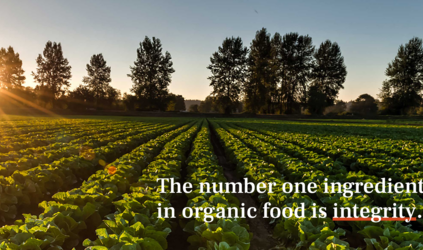
At Nuts ’n Berries, our role is simple: to source foods prepared with integrity, so your body can return to doing what it was designed to do — heal, regulate, and thrive.






0 Comments
There are no comments yet, be the first one to comment....