How to Navigate Shilajit at Nuts ’n Berries
What Is Shilajit?
Shilajit is a naturally occurring mineral resin formed over centuries from the slow breakdown of plant material and microbial activity in high-altitude mountain ranges.
As plant matter decomposes under pressure, heat, and time, it transforms into a dense, mineral-rich substance that seeps from rock crevices during warmer months.
Traditionally, shilajit has been harvested from mountainous regions such as the Himalayas and Altai Mountains.
Shilajit in Ayurvedic Tradition
In Ayurveda, shilajit has been used for thousands of years as a rasayana—a rejuvenating substance believed to support vitality, longevity, and overall balance.
It is not viewed as a quick fix, but as a foundational substance that supports the body’s systems over time.
Traditionally, it is dissolved in warm water or tea and consumed in small amounts.
Why Shilajit Matters Today
Modern life places a very different burden on the body than in traditional environments.
Soil depletion, environmental toxins, and widespread exposure to chemicals have changed the way our bodies interact with nutrients.
One of the key compounds in shilajit—fulvic acid—plays an important role in:
• Supporting mineral absorption
• Acting as a carrier for nutrients into cells
• Interacting with the gut environment
In a time when many people are concerned about soil quality and environmental exposure, shilajit has re-emerged as a way to reconnect with a broader spectrum of naturally occurring minerals.
Fulvic Acid and the Modern Gut
Fulvic acid is a naturally occurring compound found in shilajit that helps transport minerals and nutrients.
In today’s environment—where factors like soil depletion and chemical exposure are widely discussed—supporting nutrient absorption and gut function has become a priority for many people.
Shilajit is one of the most concentrated natural sources of fulvic acid.
How Nuts ’n Berries Evaluates Shilajit
Shilajit is one of the most sensitive ingredients we carry.
Before any brand earns a place on our shelf, we evaluate:
• Geographic source (Himalayan vs Altai vs other regions)
• Altitude of harvest (higher altitude = less environmental contamination)
• Form (true resin vs processed powders or extracts)
• Purification methods (how contaminants are removed)
• Heavy metal testing (critical for safety)
• Fulvic acid content and mineral profile
• Brand transparency and sourcing integrity
With shilajit, source, altitude, and purification are everything.
Understanding Shilajit Forms
Resin (Traditional Form)
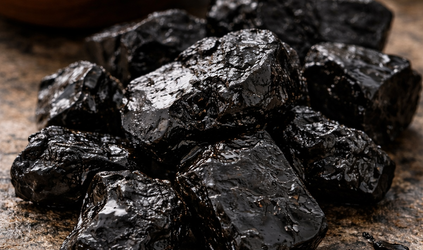
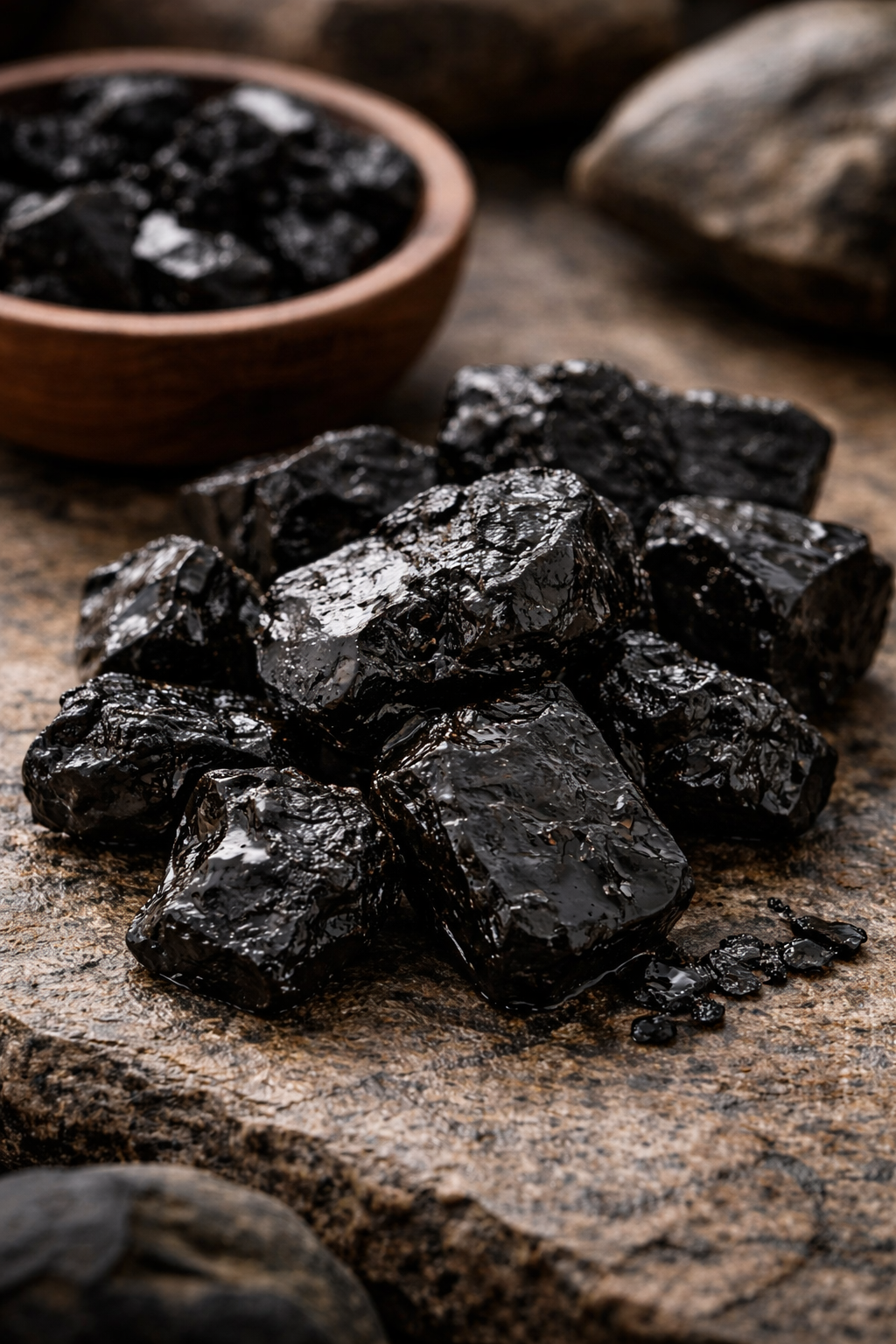
• Sticky, tar-like substance
• Dissolves in warm water
• Minimal processing
- Closest to traditional Ayurvedic use
- Highest level of integrity when sourced and purified properly
Powder
• Resin that has been dried and processed
• Easier to formulate into products
• May lose some of the complexity of the original material
- More processed than resin
Capsules
• Powdered shilajit in measured doses
• Convenient and consistent
- Simplifies use, but moves further from traditional form
Gummies
• Highly processed format
• Combined with sweeteners and stabilizers
• Designed for accessibility and taste
- Most convenient—but farthest from traditional shilajit
Source Matters: Himalaya vs Altai Mountains
Most shilajit on the market comes from the Himalayan region.
While this is the most widely known source, not all Himalayan shilajit is equal. Quality depends on altitude, environment, and purification.
Altai Mountain shilajit (used by Black Lotus) comes from a more remote and less industrialized region.
This can mean:
• Lower environmental exposure
• Different plant and microbial composition
• Potentially cleaner starting material
The difference is not just geography—it’s environmental context.
Why Heavy Metal Testing Is Critical
Because shilajit forms in rock layers, it can naturally contain heavy metals.
Proper purification and third-party testing are essential to ensure safety.
This is one of the most important factors in evaluating shilajit quality.
Why These Shilajit Brands Earned Placement at Nuts ’n Berries
Black Lotus Shilajit
Philosophy: High-altitude, high-integrity traditional resin
• Sourced from the Altai Mountains
• True resin form
• Carefully purified and tested for heavy metals
• Focused on maintaining the integrity of the original material
Our primary recommendation and best-selling shilajit
Trace Minerals Shilajit
Philosophy: Mineral-focused, standardized approach
• Produced by a well-established mineral company
• Focus on consistency and accessibility
• Typically offered in processed formats
A more approachable option for new users
My Moss Shilajit + Sea Moss Gel
Philosophy: Blended, whole-food style product
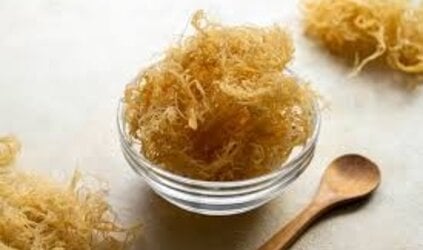
• Combines shilajit with sea moss
• Designed for ease of use and broader appeal
A hybrid product—not a pure shilajit experience
Nuts ’n Berries Shilajit Philosophy Framework
Most traditional, highest integrity: Black Lotus (Altai resin)
Most approachable entry point: Trace Minerals
Most blended/convenience option: My Moss gel
The Nuts ’n Berries Standard
Shilajit is one of the most misunderstood—and most misrepresented—ingredients in the supplement world.
We focus on sourcing, altitude, purification, and testing—not trends—so you can trust what you’re getting.